
002: Forgetting, Remembering, Allowing
In praise of Sharpies, giving yourself grace, and stepping on people's toes.

Hello, and welcome back to Apron Scribbles! It's been a while… I know!
The last few months have been a warm, sticky, sun-drenched blur. Hair knotted with sea salt, tight curls tickling the nape of my neck, the skin of my face freckled and taught across my cheekbones in the heat. Cool pints of Murphy's at the pub after a swim, ice-cold Campari sodas on the balcony after work, books laden with sand caught between the pages, the tops of my arms and the back of my neck sticky with sunscreen.


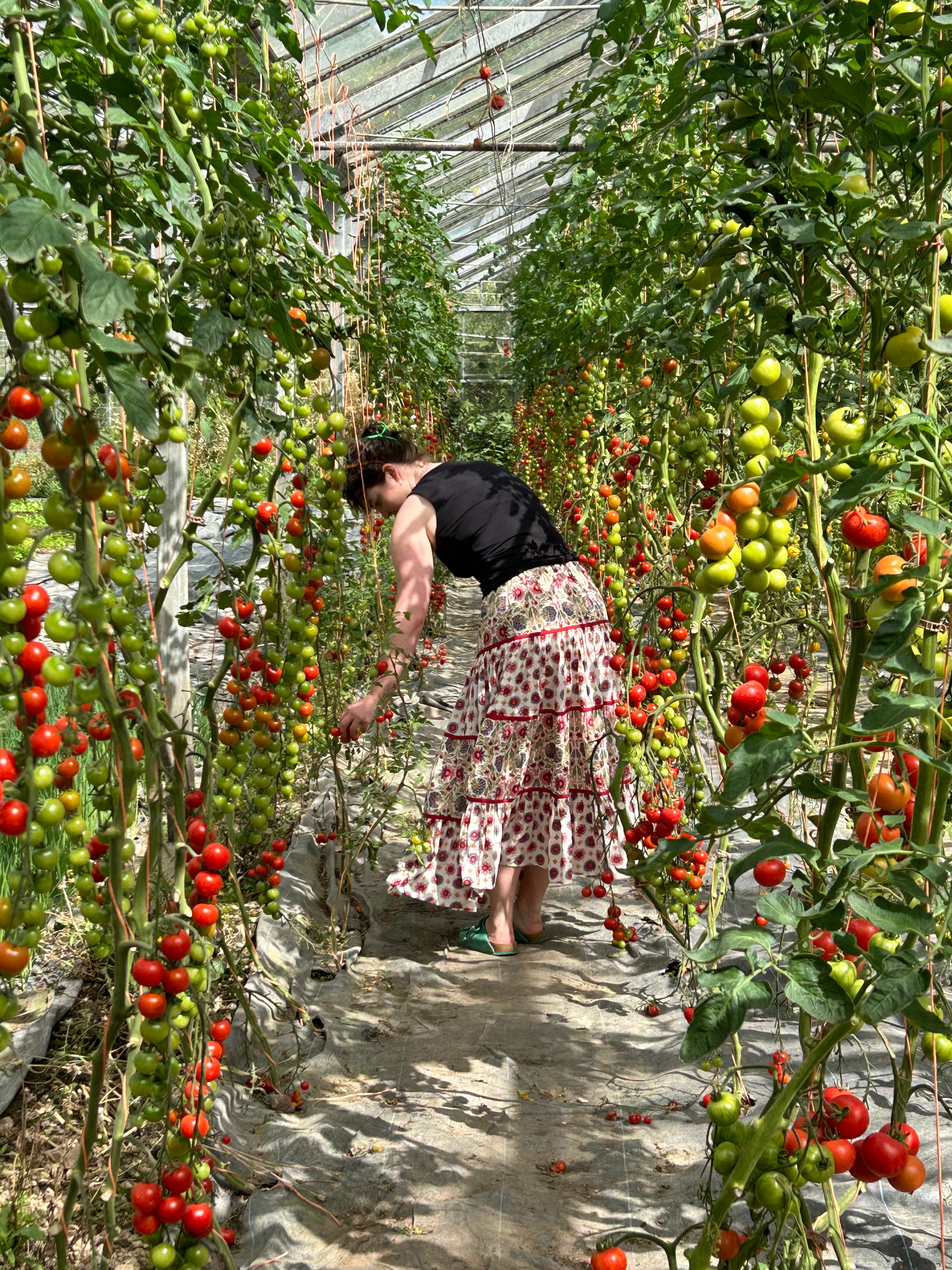
I've felt more connected to the seasons in the kitchen than ever before. I've relished the heady smell of the glasshouses and the soft, dusty skin of freshly picked tomatoes. I've admired the delicate courgette flowers, the colour of sunlight, their veined petals curled in on themselves. I've tasted the sweetness of the first cucumbers and the zing of basil at the height of its power. I know what real Irish cherries taste like, perfectly picked and carefully delivered.
Caught up in all this magic and beauty, I feel it wouldn't be too cheeky to gloss over how this instalment of Apron Scribbles has arrived in your inbox; well… ahem, oopsies, almost two months since the first.


But it's not just that I've been caught up in Summer. Starting this piece of writing was frustratingly, weirdly hard. I needed to figure out where to begin, but none of my ideas felt concrete or coherent. This was partly due to my startling ability to turn anything enjoyable into a chore but mainly because, after three months here, there has been a distinct shift.
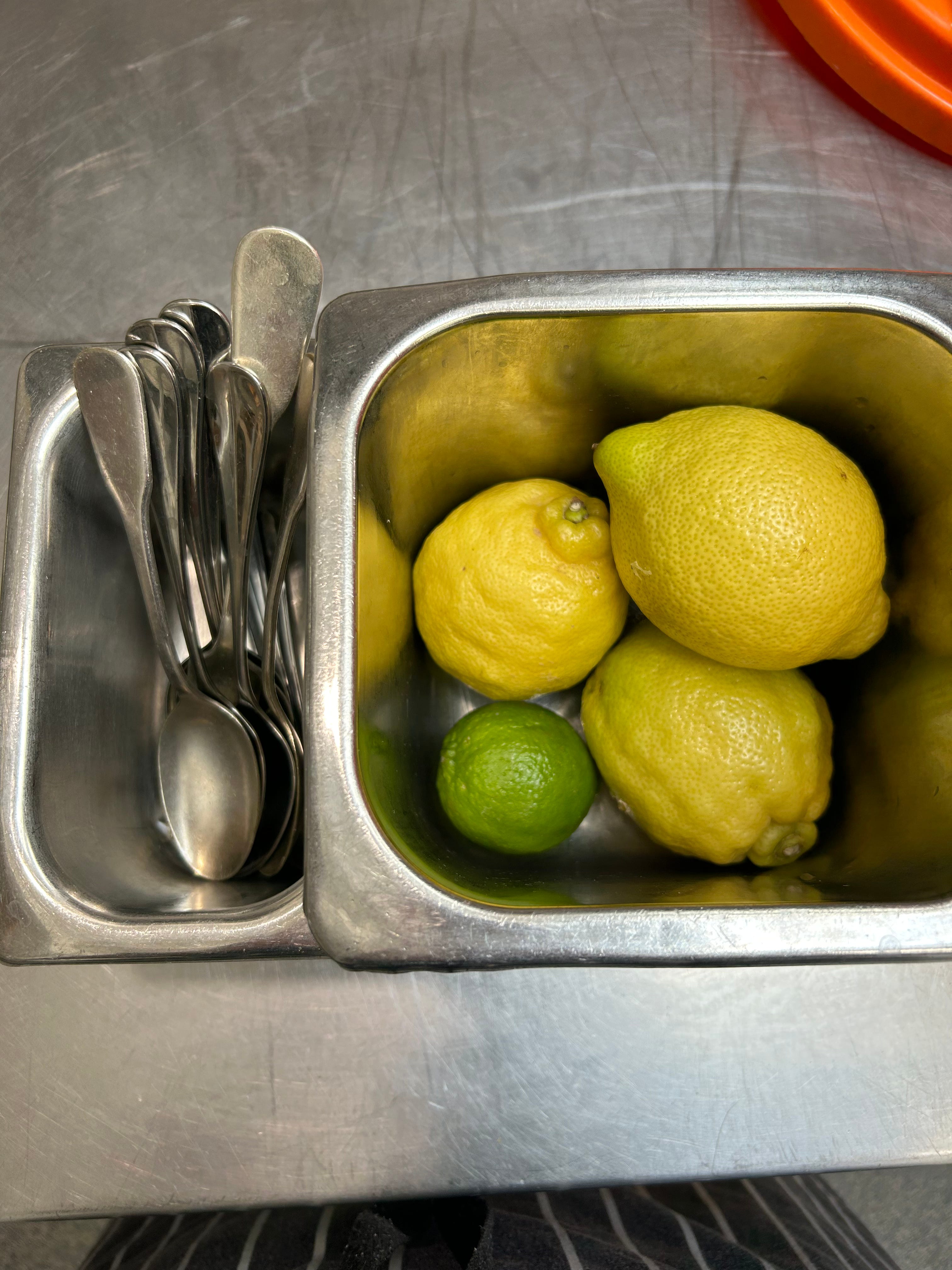
The mountains I used to climb have become molehills. Things have become pleasingly familiar. I have my rituals now. I clock in to work, head straight to the clean laundry basket and fold two tea towels into my apron strings (preferably green and purple). I gather spoons and a heap of lemons, putting them in a small mental container at my station. I go to the cold room, collect the leaves cut from the garden and set to work soaking them in the sink. Turning to the second-course fridge, I start to list the ingredients. Whipped lemon ricotta, pickled chillis in sugar syrup, roasted golden beetroot, cherries in a muscatel dressing, lobster claws. What could work for the first and second courses? Encouraged to offer suggestions for dishes, my thoughts trip one another up.
I'm now more attuned to how a service feels, but with that comes a degree of hypersensitivity. Where I used to feel a burst of pride at the end of a shift when I got through my 9 or 10 hours without dropping, burning, over-seasoning, or forgetting anything, now it felt underwhelming. The satisfaction I was looking for became more slippery and elusive. But when I take a moment to pause, I have come a long way already.
In the beginning, my brain felt like a sieve. I was constantly frustrated by my inability to retain simple details: which cheeses I needed to cut for the cheese course, how many limes I needed to zest for the sorbet, and whether the mayonnaise dressing went with the clams or mussels. But as the rhythm of the kitchen becomes more familiar, I now recognise the patterns in the directions I am given and the order in which different people want things done.
I think the most important lesson I have learnt in these three months is this:
You cannot do it all yourself.
At cookery school, trying to explain to friends what our 'lectures' were like, I often described them as a ballet. In three hours, upwards of 15 recipes could be demonstrated; complicated new techniques would be broken down to be approachable, ingredient substitutions offered quickly, and producers and importers referred to by name and generation. There were all these different moving pieces, everyone needing to hit their mark. Immersion blenders would appear out of nowhere, as dirty pots and pans would vanish. There was a shared shorthand, a common understanding of how each performance should go. Back in my kitchen, everything looked like that ballet I was so in awe of, each chef moving in harmony; meanwhile, I felt like I was blundering along at the back.
I was so caught up in trying to get faster, terrified that someone would turn around and realise I wasn't supposed to be there, that I didn't really see how people were working. I didn't see the doubling back, cross-checking, or note-taking. I didn't see the constant dialogue, both spoken or inferred.
I also had yet to notice the written notes scribbled on surfaces in Sharpie. The list of accompaniments and the labelling of specific plates for specific dishes. I didn't notice the B for back and F for front written above the hob dials. I didn't see the reminders scribbled on the inside of arms or back of hands. I hadn't registered the shortened menu scrawled on the side of the Combi oven: monkfish—red pepper and caper salsa—glazed fennel; scollops—salsa verde—cauliflower cream—spinach, so that during service, a glance was all you needed to remind yourself of what to do.


The little Sharpie reminders took me aback the first time I saw them. I thought the whole thing needed to be a 'hold it all in your head' activity—a mental exercise to prove you have "what it takes," whatever that means. But I was surrounded by reminders!
I had been lugging around these false notions of what it was to be a 'proper' chef. I was picturing a ruthlessly efficient, capable, lone wolf type. But this is a team sport. You have to help yourself to help others.
During one of my first bustling evening services a month or two ago, I had to ask for help shucking oysters. I couldn't keep up with the orders and felt that hot, panicky fog descend as I asked my Chef de Partie if I could have someone to help me. At the time, I felt like I had done something wrong, and I was prepared to get a talking-to about organisation and shuffle off home with a little cloud of shame (which is ridiculous, I know!). After we had cleaned down, one of the chefs I work with gently took me to one side and told me that if I ever wanted help, I could ask for it; in fact, I needed to! While we might be split into different sections, we all work together. We are a team. He told me there is no shame in asking for a hand. I remember giggling with relief as he mimicked waving a white flag of surrender with his red checkered tea towel.
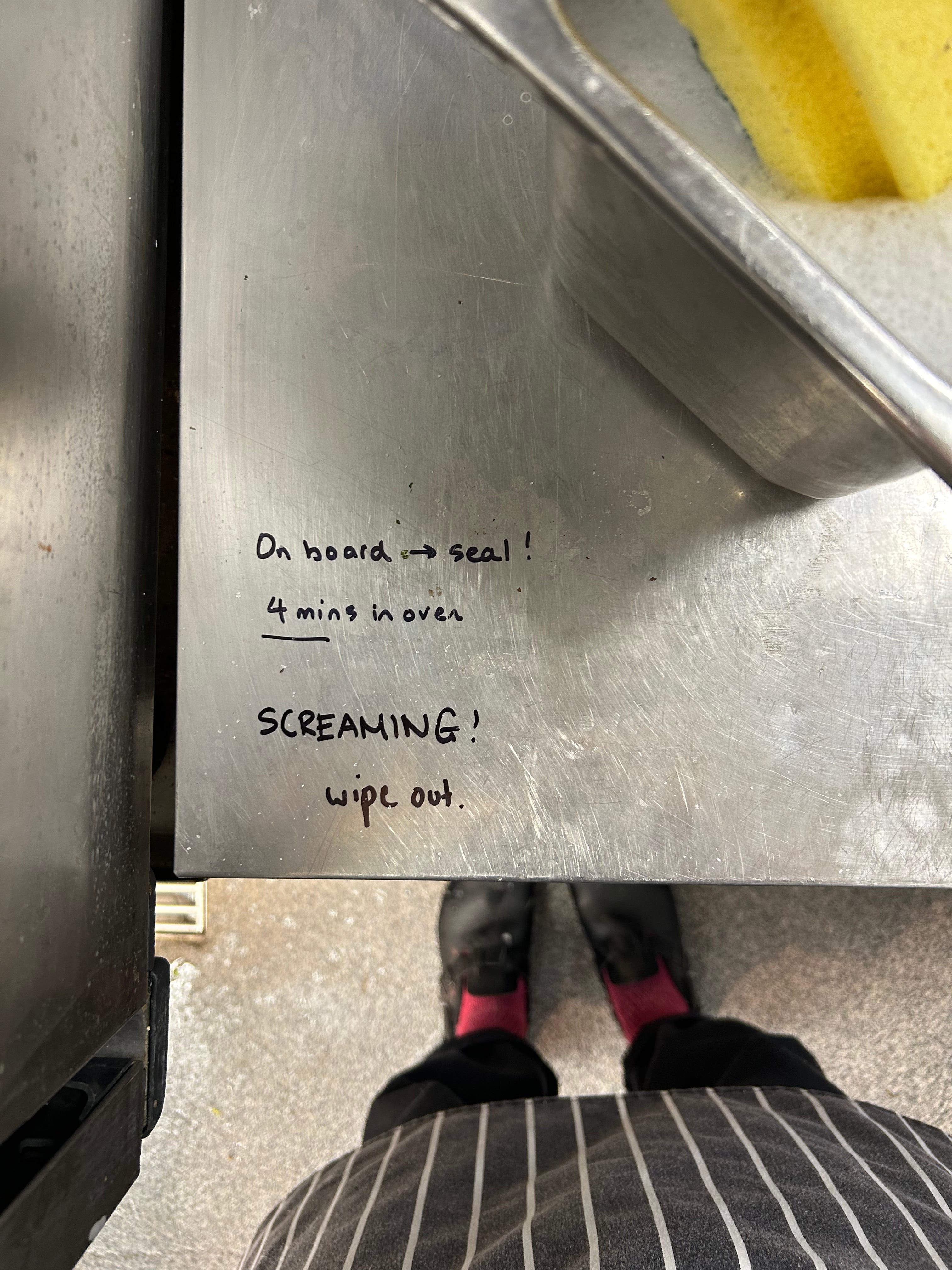
In reality, it's about simplifying life for yourself. It's why we make lists, dot, cross, and circle as we go along. Now, I try to make my life easier. I know what helps me be my best and hopefully keep improving:
I need a list divided into tasks. I need to cross, dot, or circle as I go along. I need the reassurance I can only get on a piece of paper taped to the wall.
I need one container of spoons for tasting and another of lemons for seasoning.
I feel comforted by having an extra whisk and spatula within reach. I like being overprepared.
Making notes makes me feel better, so I do it proudly instead of feeling silly for jotting things down.


Don't be afraid to step on people's toes.
As I reread the journal entries written two months ago to finish writing this piece, the word 'doubt' appears on almost every page. At one point, I've written, "My initiative is all up in my head; I can see the steps but don't want to get in the way". After one service, my Chef de Partie and I agreed that I wasn't allowed to ask, "Can I do this?" but only say, "I'm going to do this." I could read the menu plan taped to the wall, understand the layers of instruction hidden in a single word, intuitively know what jobs should be started fist and what left till the end. I understand how having someone at your elbow could be a little grating, asking if they could prep the quail or start the sorbet when the to-do list was taped to the wall, but I still felt the need to ask permission before taking ownership of any tasks.
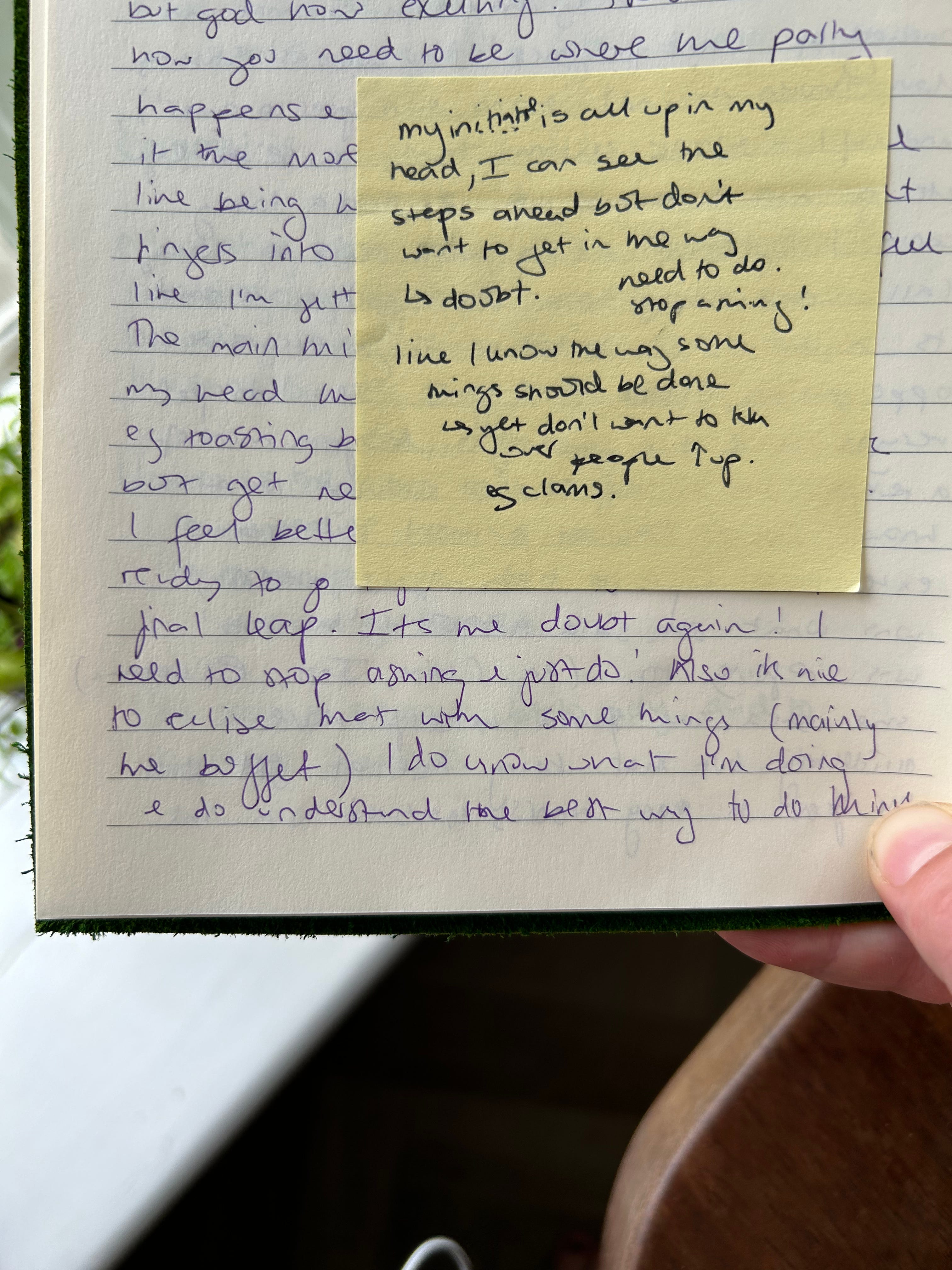
What I found hard to convey was that I wasn't asking all these questions because I was unsure what to do. I was asking precisely because I did know what to do but wanted to avoid assuming anything, getting carried away, or appearing overconfident. I was worried about stepping on someone else's toes. I didn't feel qualified to make any decisions about anything. It's like I was trying to catch myself out, trip myself up, and prove that I'm a civilian in chef's clothing.
Slowly, gradually, this changed. Each day, as I arrived at work and looked at the new menu taped to the wall, I recognised more and more. There was such freedom in getting on with jobs without waiting for instructions. As what was once foreign became familiar, my shoulders lowered, my spine straightened, and I felt like I could afford myself time to start seeing. I became more confident, taking up a little more space. Instead of feeling glued to my chopping board for fear of getting something wrong, I could stand a little taller, look away from a bubbling pot to take a second to chatter and ask the questions I had been keeping on the tip of my tongue. I felt like I was finally getting to play ball. I became confident enough to make and roll the pasta, fillet the plaice, break down the duck, make staff food, and suggest new recipes by food writers I love.


It's the beginning of August, the start of my fourth month here, and I still find myself asking the odd question to which I already know the answer. While I still feel a pang of guilt when someone takes one of my tasks, and I berate myself quietly when I have to ask for help during a busy service, I come back to what I was told all the way back in May: this is a team sport. It's not every woman for herself. And how boring would life be if it was…
Thank you for reading this newsletter from Apron Scribbles! If you enjoyed it, please consider sharing it!
What I’m currently reading: I’ve just finished Rachel Roddy’s ‘Five Quarters: Recipes and Notes from a Kitchen in Rome'. I’m moving to Rome next August, which I’m unbelievably excited and nervous about. This gorgeously written and researched book filled me with even more excitement, which I didn’t think was possible! I was transported to Rome’s thriving markets from the comfort of my sofa, and now, I have a ridiculously long list of trattorias and cafe bars that I must visit.
On to fiction - I was totally gripped by Roz Dineen’s debut, Briefly Very Beautiful. In a country destroyed by brutal wildfires, shortages, and domestic terrorism, a mother decides to leave her home in the City with her three young children. They flee North hoping for greener safety, but the lines distinguishing family, friend, and foe are murky. The book is a claustrophobic, beautifully poetic, and completely absorbing portrait of a mother’s love and a piercing examination of the climate crisis.
What I’m listening to: I thought I’d share my current playlist. It’s a mix of old classics (Jack Johnson, KT Tunstall) and new favourites (Billie Marten, CMAT). Enjoy!
Thank you for reading,
All my best wishes,
Merry x
words seem to effortlessly flow out of you, merry!! such a gorgeous read x
What an amazing text that you have put up, just simply magnificent ❤️